CMMH 2025


Speakers
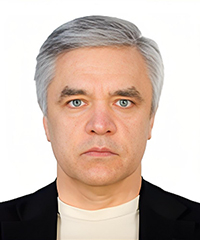
Sergey V. Suchkov
Professor, N.D. Zelinskii Institute for Organic Chemistry of the Russian Academy of Sciences, Moscow, Russia.
Research field: Immunochemical Characteristics of Three Novel Reina-specific Antigens in Humans and Some Mammals; Serology in Ophthalmic Oncology - findings and Outlook for the Future; Catalytic Antibodies in Immune-mediated Disorders, Clinical and Immune-mediated Syndro.
Sergey Suchkov graduated from Astrakhan State Medical University and awarded with MD, then in 1985 maintained his PhD at the I.M. Sechenov Moscow Medical Academy and in 2001, maintained his Doctorship Degree at the Nat Inst of Immunology, Russia. From 1987 through 1989, he was a senior Researcher, Koltzov Inst of Developmental Biology. From 1989 through 1995, he was a Head of the Lab of Clinical Immunology, Helmholtz Eye Research Institute in Moscow. From 1995 through 2004, a Chair of the Dept for Clinical Immunology, Moscow Clinical Research Institute (MONIKI. Dr Suchkov has been trained at: NIH; Wills Eye Hospital, PA, USA; Univ of Florida in Gainesville; UCSF, S-F, CA, USA; Johns Hopkins University, Baltimore, MD, USA. He was an Exe Secretary-in-Chief of the Editorial Board, Biomedical Science, an international journal published jointly by the USSR Academy of Sciences and the Royal Society of Chemistry, UK.
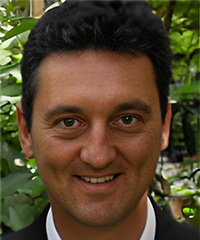
Michele Biasutti
Full Professor, Padova University, Italy.
Research field: Psychology; Project Evaluation; Research in Education; ICT, E-learning; Education for Sustainable Development; Psychology.
Michele Biasutti PhD is Full Professor at Padova University. He was scientific director of research projects funded by the Inter-University Center of Excellence for Educational Research and Advanced Training, of a two-year university research project and has participated in several national research projects including the Prin (2002) on the evaluation of university teaching. At an international level he was scientific director and coordinator of research units of about ten projects including "ISSEMT", Curriculum planning in higher education for sustainable development in the framework of the Bologna process funded by UNESCO BRESCE and by REIC (Bosnia Herzegovina), and three-year European Tempus projects (EACEA) such as LMPSM (coordinated by the University of Iasi, Romania), RUCAS (coordinated by the University of Crete, Greece). He is Coordinator of the National Unit of the European project Education for sustainable development in Protected Areas, coordinated by the University of Athens (Greece) and of the ERASMUS + CCSAFS projects (coordinated by the University of Crete, Greece), EducaMigrant, coordinated by Uşak İl Milli Eğitim Müdürlüğü (Turkey), Out of the Net coordinated by Zespol Szkol i Placowek Specjalnych ZSiPS, (Poland), Beyond The Limits: Developing Entrepreneurship via Creativity in Schools, (Sakarya Üniversity).
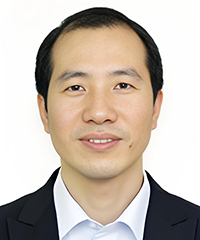
Ming Chen
Professor, Zhejiang University, China.
Research field: Omics Big Data Integration and Mining; Plant Non-Coding Rnas, Systems Biology and Integrated Network Modelling; Algorithm Development & Artificial Intelligence (Precision Medicine).
Prof. Ming Chen received his PhD in Bioinformatics from Bielefeld University, Germany, in 2004. Currently, he serves as a Full Professor in Bioinformatics at the College of Life Sciences, Zhejiang University, and is an academic leader in the field of Bioinformatics at the university. He has a long career in scientific research and education of bioinformatics and systems biology. He has published over 200 SCI academic papers in journals such as Cell, Nature, Nucleic Acids Research, and Bioinformatics, and his google scholar H-index is over 57. Prof. Chen is a national leading expert in bioinformatics for China's "101 Plan" in biological education. He also chairs the Bioinformatics Society of Zhejiang Province, China, and serves as a committee member for multiple Chinese academic societies, including the "Biological Systems Modelling and Simulation Society", "Computational Systems Biology Society", "Functional Genomics & Systems Biology Society", and "Biomedical Information Technology Society".
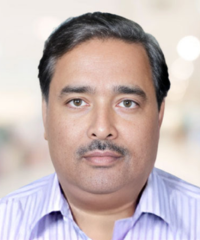
Bechan Sharma
Professor, University of Allahabad, India.
Research field: Molecular Biology; Virology; Tropical Disease Research; Biochemical Toxicology; Drug Development; Free Radical Biology; Phytomedicine.
Dr. B. Sharma working as a Professor, Biochemistry Department of Allahabad University, India has research interests in Molecular Biology & Toxicology. He has completed his Postdoctoral Fellow in HIV-1 from University of Medicine and Dentistry School, New Jersey, USA and PhD in Biochemistry from B.H.U.-Varanasi, U.P & CDRI-Lucknow, India. He has twenty five years of teaching-research experience, numbers of Awards & 146 research publications, 2 Books, 12 chapters, 1 US patent and supervised 10 Ph.D. students. He is Chief Editor/ Associate Editor of 89 & reviewer for 137 International journals. He has been visiting scientist in USA, Italy, France, UK, The Netherlands, Thailand, Germany, Iran. He is a member of American Chemical Society, USA, and American Association for the Advancement of Science, USA, and International Forum for Public Health, Shanghai, China, and life member of Society of Biological Chemists, India, Academy of Environmental Biology, India, and Indian Science Congress Association, India. He is also serving as member of many scientific committees.

Ram Bilas Pachori
Professor, Indian Institute of Technology Indore, India.
Research field: Signal and Image Processing; Biomedical Signal Processing; Non-stationary Signal Processing; Speech Signal Processing; Brain-Computer Interface; Machine Learning; AI and IoT in Healthcare.
Ram Bilas Pachori received B.E. degree with honours in Electronics and Communication Engineering from RGPV, Bhopal, India, in 2001, M.Tech. and Ph.D. degrees in Electrical Engineering from IIT Kanpur, India, in 2003 and 2008, respectively. Before joining IIT Indore, India, he was Post-Doctoral Fellow at the Charles Delaunay Institute, UTT, France (2007-2008) and Assistant Professor at Communication Research Center, IIIT Hyderabad, India (2008-2009). He was Assistant Professor (2009-2013), Associate Professor (2013-2017), and Professor (2017-2023) at Department of Electrical Engineering, IIT Indore, where he has been Professor (HAG) since 2023. He was Visiting Professor at University of Calabria, Rende, Italy, in July 2023; University of Malta, Malta, from June 2023 to July 2023; Free University of Berlin, Germany, from July 2022 to September 2022; Taylor's University, Malaysia, from 2018 to 2019. Previously, he was Visiting Scholar at Ulster University, Londonderry, UK, in December 2014. His research interests include signal and image processing, biomedical signal processing, non-stationary signal processing, speech signal processing, brain-computer interface, machine learning, and AI and IoT in healthcare. He has more than 365 publications which include journal articles, conference papers, books, and book chapters with approximately 19000 citations as per Google Scholar (March 2025). He is Fellow of IEEE, IET, IETE, and IEI. He was Associate Editor of IEEE TNSRE (2021-2024). Currently, he is Associate Editor of Electronics Letters, IEEE OJEMB, Computers and Electrical Engineering, and BSPC. He is also serving as Handling Editor of Signal Processing and Editor of IETE Technical Review journal.
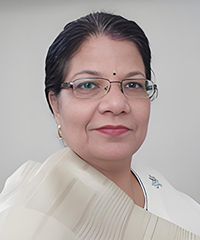
Neelam Singh Sangwan
Professor and Head, Department of Biochemistry, Central University of Haryana Mahendergarh Jant Pali, India.
Research field: Functional Genomics; Phytochemical Genomics; Biochemical Aspects; Validation of Traditional Knowledge Of Medicinal and Aroma Plants.
Neelam Singh Sangwan born in Lucknow (U.P.), India on 2 January 1966. Educated at SSV School, Pioneer Montessori School, Lucknow, 1969-74; NKV Degree College, 1975-81; University of Lucknow; 1985; CSIR-Central Institute of Medicinal and Aromatic Plants (CIMAP), 1985-89; B.Sc 1983; M.Sc, 1985; Ph.D 1989. Senior Scientist (F), Central Institute of Medicinal and Aromatic Plants (CIMAP-CSIR), Lucknow 2009 to date. Scientist B, CSIR-Complex, Palampur (Now Institute of Himalayan Bioresource Technology, Palampur) 1989-91; Scientist-B, 1991-94, Scientist-C, 1994-99, Scientist E-I, 1999-2004, and Scientist E-II, 2004-09, CSIR-CIMAP, Lucknow. Visiting Scientist at The Samuel Roberts Noble Foundation, Oklahoma, USA, 2005-2006; INSA-Royal Society Visiting Scientist at John Innes Centre, Norwich, UK, 2000.
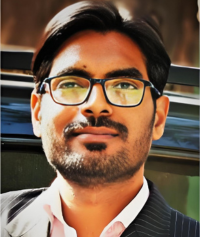
Omkar Singh Kushwaha
Senior Principal Project Scientist, Chemical Engineering Department, Indian Institute of Technology Madras Chennai, India.
Research field: Biomaterials, Synthesis; Material Characterization; Thin Films and Nanotechnology; Polymers; Nanomaterials; Nanoparticle; Nanomaterials Synthesis; Nanostructured Materials.
Dr. Kushwaha is recipient of DST-SERB & CSIR Projects for independent research. He is a multidisciplinary Scientist, with experience of teaching & research of Chemistry, Engineering, Polymers, Materials, Nanomaterials & Biomaterials, Composites, High pressure reactions, contaminated water-treatment, and many more. Dr. Kushwaha is open to world-wide collaborations across all disciplines of research in order to learn, share and promote science and technology.

Ata Jahangir Moshayedi
Associate Professor, Jiangxi University of science and Technology, China.
Research field: Biomedical; Service robot; Machine learning/vision; Neuroscience; Sensor modeling; Bio feedback.
Dr. Ata Jahangir Moshayedi is an associate professor at Jiangxi University of Science and Technology in China, holds a PhD in Electronic Science from Savitribai Phule Pune University in India. He is a distinguished member of IEEE (Senior Member) and ACM, as well as a Life Member of the Instrument Society of India and a Lifetime Member of the Speed Society of India. Additionally, he contributes to the academic community as a valued member of various editorial teams for international conferences and journals. Dr. Moshayedi's academic achievements are, marked by a portfolio of over 90 papers published ,2 patent and 12 copyright, across esteemed national and international journals and conferences along with 3 books on robotics (VR and mobile olfaction) and embedded systems. In addition to his scholarly publications, he has authored three books and is credited with two patents and nine copyrights, emblematic of his pioneering contributions to the field. Currently, Dr. Moshayedi is actively engaged in pioneering work at Jiangxi University.

Bing Liu
Associate Professor, Shanghai University of Sport, China.
Research field: Synthesis and Analysis of Isomeric Small Molecules; Stable Isotope Analysis and Detection; Establishment and Application of New Methods for Tracing and Detecting Endogenous Stimulants.
Dr. Liu is currently an Associate Professor at the School of Exercise and Health, Shanghai University of Sport. She is also a Master's Supervisor at the National Doping Detection Shanghai Laboratory, Shanghai University of Sport. She is also the head of the doping isotope tracing and detection team. Her research areas mainly include: synthesis and analysis of isomeric small molecules, stable isotope analysis and detection, and the establishment and application of new methods for tracing and detecting endogenous doping. She holds 4 domestic patents; has led 2 provincial and ministerial-level projects and participated in 3 provincial and ministerial-level horizontal research projects, and has published over 20 SCI papers, including 6 as first author or corresponding author in journals such as ACS Catal., Chem. Comm., Adv. Synth. Catal., and Org. Chem. Front.
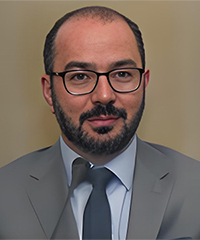
Orestis Ioannidis
Assistant Professor, Aristotle University of Thessaloniki, Greece.
Research field: Surgery; Nutrition, Infections; Laparoscopy; Oncology.
Dr. Orestis Ioannidis is an Assistant Professor of Surgery at the Medical School of Aristotle University of Thessaloniki. He earned his medical degree from the same institution in 2005. He went on to complete two master's degrees—one in Medical Research Methodology (2008) from Aristotle University, and another in Surgery of the Liver, Biliary Tree, and Pancreas (2016) from Democritus University of Thrace. In 2014, Dr. Ioannidis was awarded a PhD from Aristotle University of Thessaloniki, graduating as valedictorian for his thesis titled “The effect of combined administration of omega-3 and omega-6 fatty acids in ulcerative colitis: An experimental study in rats.” A practicing General Surgeon, he has a strong clinical and academic focus on laparoscopic surgery, surgical oncology, surgical infections, acute care surgery, perioperative nutrition, ERAS (Enhanced Recovery After Surgery), and vascular access. He is a fellow of several prestigious surgical societies, including EAES, ESSO, EPC, ESCP, and ACS. Dr. Ioannidis is an accomplished researcher, having authored over 180 scientific publications, accumulating more than 3,000 citations and an H-index of 28.
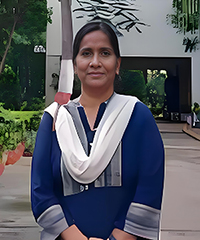
Varalakshmi Manchana
Associate Professor, University of Hyderabad, India.
Research field: Healthy and Cognitive Ageing;<br/> Women and Child Health, Non-Communicable Diseases;<br/> Health Care Ethics; Social and Gender Equity Dimensions of Health.
Dr. Varalakshmi Manchana, in teaching at higher education institutions for graduate and master nursing programs since 2007, worked in various capacities like Assistant Professor, Vice Principal and Principal before joining at University of Hyderabad (2010). She teaches MPH program and supervises PhD health sciences scholars. Her specific research focus is Sociobehavioural health; and socio-behavioural interventions for healthy, cognitive ageing and mental wellbeing. Dr.Manchana developed age sensitive physical exercise (HAAEP-PACE) program for functional health and fall prevention in ageing population. She is recipient of the International fellowship for senior Biomedical Scientists, by the Indian Council of Medical Research (ICMR) (2022-2023), in the area of Ageing and social change and she is awarded with international faculty mobility program to Canada and received international program development grant (2018) to conduct, “India Ageing Study” pilot research. She is also recipient of extramural research grants for her research on Child Injuries (ICMR), Health and Social status in QOL of older population (ICSSR). Her ongoing research on ‘Fall risk and Dementia Prevention through CogPhyEx’ funded by the Institution of Eminence grant. Developed an ‘Active and Healthy Ageing Research Lab’ procuring equipment grant from UoH and DST FIST and started the ‘Healthy Ageing Initiative’ with scientific social responsibility extending her research to rural and urban communities to promote and sensitize population towards active aging and wellbeing. She has presented her work in the national and international conferences in US, Canada, Singapore, Sweden, and Malaysia and visited to present her work at countries like US, Canada and Sweden. She has organized national and international conferences in the area of Ageing, Gender and Ethics. She is a reviewer in several indexed journal review boards, has published 24 research papers, three book chapters in indexed journals and ten other articles. She is experienced in professional accreditation processes and is an adhoc member for professional council and serves as a member in various scientific and professional committees, PhD external examiner and coordinates programs of external academic collaboration. Published 28 research papers, 10 articles and three book chapters in impact journals and presented papers in various international conferences in US, Canada, Sweden, Singapore, Malaysia and India, Scientific reviewers for journals from Springer Nature, Taylor and Francis, Elsevier, Dove Press, Frontiers in Nutrition, BMC Public health, Bentham Science Publishers etc.

Oon Chern Ein
Associate Professor, Universiti Sains Malaysia, Malaysia.
Research field: Molecular Oncology; Sirtuin; Notch Signalling; Tumour Angiogenesis; Drug Discovery, Cancer-Targeted Therapies; Bioengineering Solutions.
Associate Professor Dr. Oon Chern Ein is dedicated to advancing innovative cancer therapies. She earned her BSc (First Class Hons) in Biotechnology from Universiti Kebangsaan Malaysia and pursued her DPhil in Medical Oncology at the University of Oxford, United Kingdom. Following this, she trained as a postdoctoral fellow at Karolinska Institutet, Sweden. She has served as a lecturer at Universiti Sains Malaysia since 2013. Chern’s work in molecular therapeutics has earned her numerous prestigious awards, including the L’Oreal-UNESCO For Women in Science National Fellowship (2015), the Women of the Future Awards (South East Asia), and the Malaysian National Young Scientist Award (2018). She was further recognized with the Promising Academician Award and Excellent Service Award by the Malaysian Ministry of Higher Education (2019), alongside the British Council Study UK Alumni Award (Professional Achievement Category) and MINDS Women Scientist Award in 2020. Most recently, she received the Singapore Academies-ASEAN Fellowship from the Singapore National Research Foundation to train in drug discovery at A*STAR Singapore to strengthen her industrial insights. Her multidisciplinary research encompasses drug discovery, cancer-targeted therapies, and bioengineering solutions through collaborations with industry partners. She holds two granted patents in Malaysia (MY-203445-A, MY-199524-A) for small molecule inhibitors targeting anti-cancer and anti-angiogenesis pathways. As a member of the Global Young Academy, Chern actively champions female empowerment and education for all. Chern’s research continues to bridge academia and industry, striving to transform cancer therapy through novel therapeutic strategies.
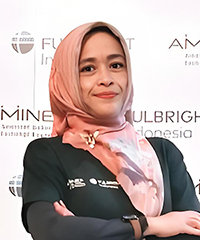
Stalis Norma Ethica
Associate Professor, Universitas Muhammadiyah Semarang, Indonesia.
Research field: Microbial Biotechnology; Biochemistry; Toxicology.
Dr. Stalis Norma Ethica, M.Si., is an Associate Professor with the Magister of Public Health Program at Universitas Muhammadiyah Semarang, Indonesia, with courses taught to students in Biochemistry, Molecular Biology, Toxicology, Bioinformatics, and Food Biotechnology. Her research comprises isolating and characterizing enzymes and toxins for their encoding genes involving bioinformatics, genomics, and proteomics studies from bacterial sources. Her enzymes of interest are those with potential as antithrombosis, antibiofilm, anti-necrosis, and bioremediation agents. Genetic engineering and downstream processes for wound healing applications of marine bacterial protease have been a new area of research for Dr. Norma. The research allows her to cooperate with the Indonesian Ministry of Research and High Education, the health industry through the Matching Fund Kedaireka, and recently with Oregon State University USA through the Fulbright postdoctoral research grant. By October 2024, her 40 reputed publications had earned a Scopus H-index of 7, with more than 700 Google Scholar citations.
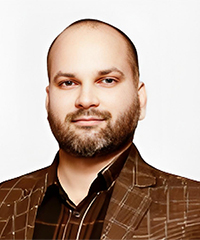
Faez Iqbal Khan
Assistant Professor, Xi'an Jiaotong-Liverpool University, China.
Research field: High-Throughput Virtual Screening to Identify Novel Inhibitors for Cancer Therapy; Pharmacophore Modeling; Rational Drug Design.
Dr. Faez Iqbal Khan is an Assistant Professor in the Department of Biological Sciences at Xi'an Jiaotong-Liverpool University (XJTLU). He earned his Ph.D. in Computational Chemistry (Bioinformatics) from Durban University of Technology, South Africa, and holds a Fellowship (FHEA) from Advance HE, UK.Dr. Khan's research focuses on protein engineering, protein folding, drug design, and protein dynamics. He has held academic and research positions at Rhodes University, South China University of Technology, and the University of Electronic Science and Technology of China. He has authored over 90 peer-reviewed publications and was listed among the top 2% of scientists worldwide in Stanford University's 2022 global rankings.He has received research funding from the China Postdoctoral Science Foundation, Sichuan Province, and XJTLU's Research Development Fund, among others. Dr. Khan also holds adjunct appointments at Taylor's University (Malaysia) and Datta Meghe Institute of Higher Education and Research, and an honorary appointment at the University of Liverpool. He is affiliated with several Suzhou-based key laboratories, including the Suzhou Municipal Key Lab for Metabolic Syndrome Drug Research and AI4Health Suzhou Key Laboratory.
Latest News
December 08, 2025
CMMH 2025 was Successfully Held! →December 01, 2025
CMMH 2025 Conference Program →December 13, 2024
CMMH 2025 starts calling for papers →Supported By